
TL;DR:
- A home renovation inspection verifies that construction complies with building codes and safety standards during two critical phases.
- It involves a rough-in inspection before drywall is installed and a final inspection to ensure overall safety and quality.
A home renovation inspection is a formal assessment that verifies all construction work meets building codes, safety regulations, and quality standards. This process is the industry’s standard term for what homeowners often call a “renovation checkup,” and understanding what does home renovation inspection involve can save you thousands of dollars and serious legal headaches. Inspections cover structural systems, electrical wiring, plumbing, HVAC, and life-safety devices across two distinct phases. The International Residential Code (IRC) and the National Electrical Code (NEC) set the compliance benchmarks inspectors use. Knowing these phases and what inspectors prioritize puts you in control of your renovation from start to finish.
What does a home renovation inspection involve at each phase?
A renovation inspection happens in two distinct phases: the rough-in inspection and the final inspection. Each phase has a specific purpose, and skipping either one carries real financial and legal risk.
Phase 1: The rough-in inspection
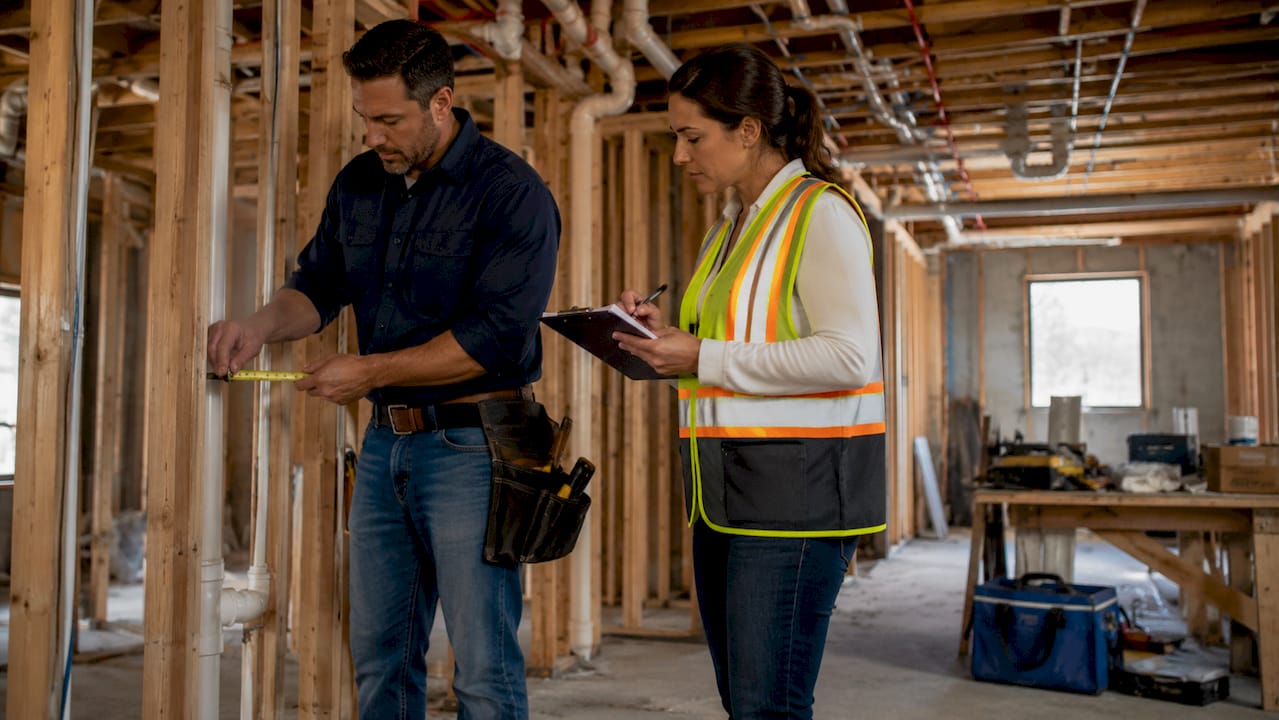
The rough-in inspection happens before walls are closed up with drywall. At this stage, the inspector examines framing, plumbing supply and drain lines, electrical wiring runs, and HVAC ductwork while everything is still visible. A standard rough-in inspection lasts 30–60 minutes, though complex projects run longer. That window is enough for a trained inspector to identify code violations that would be invisible once the walls go up.
The stakes here are high. Installing drywall before rough-in passes forces you to tear out finished surfaces to expose the work for mandatory review. That means paying twice for labor and materials on the same wall. Passing the rough-in is a green light to proceed, not a guarantee of final approval.
- Schedule the inspection before any wall closure. Confirm with your local building department that all required permits are pulled first.
- Verify all trades are finished with their rough work. Electrical, plumbing, and HVAC rough-ins must all be complete before the inspector arrives.
- Keep the work area accessible. Clear debris and remove obstructions so the inspector can reach every cavity.
- Document the pass in writing. Get the signed permit card or digital approval before your contractor proceeds.
Pro Tip: Request a copy of the rough-in checklist from your local building department before work begins. Reviewing it with your contractor prevents common violations before the inspector ever shows up.
Phase 2: The final inspection
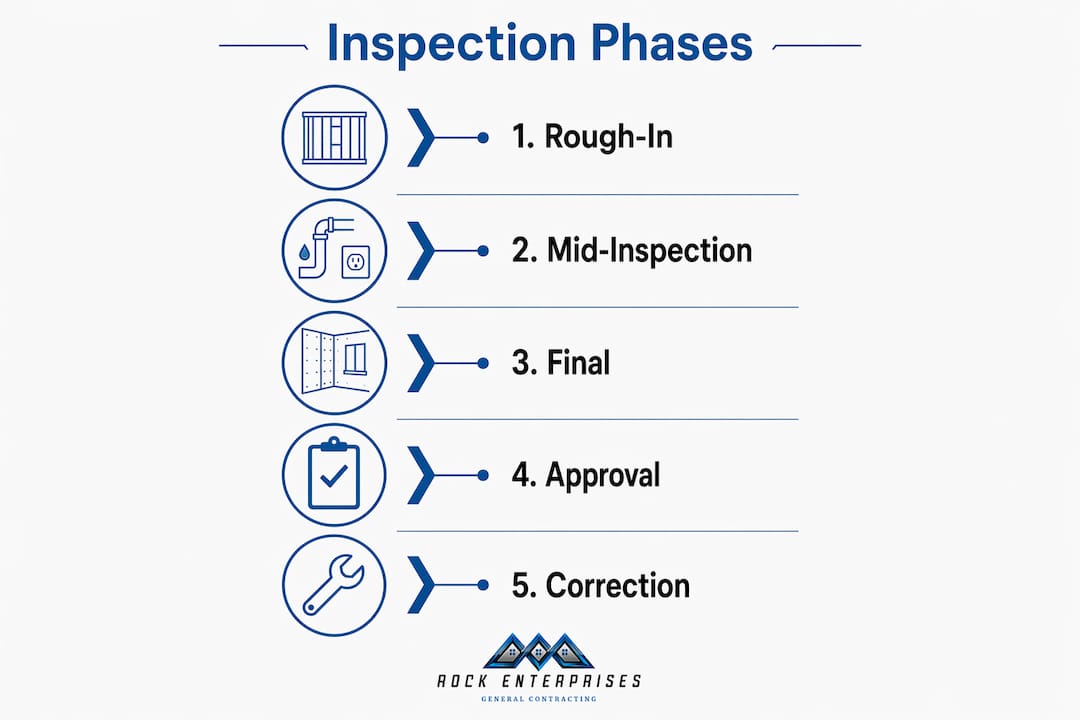
The final inspection evaluates the completed renovation as a whole. Final inspections assess overall workmanship, safety device installation, and whether trades like plumbing and electrical have compromised each other’s work during later phases. A plumber cutting through a joist to run a drain line, for example, can undermine structural integrity that passed the rough-in. The final inspection catches exactly that kind of problem. Passing this phase is required before a certificate of occupancy or final permit sign-off is issued.
What components are evaluated during a renovation inspection?
Inspections cover two categories: performance systems and life-safety systems. Cosmetic finishes are not the focus. Here is what inspectors actually examine:
- Structural systems: Load-bearing walls, beams, floor joists, and foundation connections are checked for proper sizing, fastening, and any damage caused during renovation work.
- Electrical wiring: Inspectors verify wire gauge, circuit breaker sizing, proper grounding, and the presence of GFCI (Ground Fault Circuit Interrupter) protection in wet areas like kitchens and bathrooms, as required by the NEC.
- AFCI protection: Arc Fault Circuit Interrupter breakers are required in bedrooms and living areas under current IRC standards. Many older homes lack them, and renovations trigger the upgrade requirement.
- Plumbing supply and drainage: Pressure testing confirms no leaks in supply lines. Drain slope, trap installation, and vent pipe routing are checked against code.
- Fire blocking: Penetrations through wall cavities where plumbing or electrical passes between floors must be sealed with approved fire-blocking material.
- HVAC ductwork: Duct connections, condensate drainage from air handlers, and combustion air supply for gas appliances all receive scrutiny.
- Insulation and energy compliance: Many jurisdictions require insulation to meet minimum R-value standards when walls are opened during renovation, per local energy codes.
- Life-safety devices: Smoke detectors and carbon monoxide detectors must be present, properly located, and interconnected where required.
Inspectors prioritize structural integrity and life-safety systems over everything else. That priority reflects a simple truth: a crooked tile is a nuisance, but a missing GFCI outlet near a sink is a electrocution risk.
| System | What inspectors check | Code reference |
|---|---|---|
| Electrical | Wiring, grounding, GFCI/AFCI protection | NEC |
| Structural | Framing, joists, load-bearing connections | IRC |
| Plumbing | Supply pressure, drain slope, venting | IRC |
| Life-safety | Smoke and CO detector placement | IRC |
| HVAC | Duct sealing, condensate drainage | Local energy codes |
Why are renovation inspections critical for homeowners?
Inspections reveal hidden defects that no amount of visual walkthrough will catch. A contractor can install beautiful tile over a shower pan that was never properly waterproofed. Without an inspection, you discover the leak six months later when water has rotted the subfloor. The importance of home renovation inspection goes beyond compliance. It is your primary tool for holding contractors accountable before you release final payment.
“An inspection pass is not a guarantee of a flawless renovation. Vigilant follow-up and independent verification are necessary to protect your investment and confirm that every trade performed their work correctly before walls close and funds transfer.”
Legal compliance is equally non-negotiable. Unpermitted work can void your homeowner’s insurance, complicate a future sale, and expose you to fines. Re-inspection fees are not included in the original permit fee, so failed inspections add direct costs on top of the correction work itself. Passing every phase cleanly is the cheapest path through a renovation.
Structural defects discovered after purchase can significantly lower a property’s market value and create expensive repair obligations. Buyers who skip inspection verification before closing inherit those problems without recourse.
How can homeowners prepare for a renovation inspection?
Preparation is the difference between a smooth inspection and a costly re-inspection. The home inspection process rewards homeowners who treat it as a scheduled milestone, not an afterthought.
- Pull permits before work starts. Your contractor should handle this, but verify it yourself. Work done without permits cannot be legally inspected or approved.
- Align inspection scheduling with project phases. Book the rough-in inspection as soon as all trades complete their rough work. Do not let the project sit idle waiting for an appointment.
- Keep all work accessible. Inspectors cannot approve what they cannot see. Insulation, vapor barriers, and any covering materials must stay off until the rough-in passes.
- Document corrections in writing. If the inspector flags a violation, get the correction requirement in writing and confirm the fix before scheduling a re-inspection.
- Get an independent inspection. Independent professional inspections give you leverage to negotiate corrections and avoid releasing final payment prematurely. A contractor’s own sign-off is not a substitute.
- Review your home renovation checklist with your contractor. Walk through every system on the inspection checklist before the inspector arrives to catch obvious issues first.
Pro Tip: Set aside a contingency fund of 10%–30% of your renovation budget to cover unexpected corrections uncovered during inspections. This range accounts for both minor fixes and major code-compliance upgrades.
The final walkthrough in your renovation is a separate step from the official inspection, but it works best when you use the same performance lens: structural integrity first, safety systems second, cosmetic finishes last.
Key Takeaways
A home renovation inspection is a two-phase, code-driven process that protects your safety, your budget, and your legal standing as a homeowner.
| Point | Details |
|---|---|
| Two mandatory phases | Rough-in and final inspections each serve distinct purposes and both must pass. |
| Performance over cosmetics | Inspectors prioritize structural integrity, electrical safety, and life-safety systems first. |
| Independent verification matters | Hiring an independent inspector gives you leverage before releasing final payment. |
| Budget for corrections | A 10%–30% contingency fund covers unexpected code-compliance fixes found during inspection. |
| Permits are non-negotiable | Unpermitted work cannot be inspected, can void insurance, and complicates future sales. |
Why I think most homeowners underestimate the rough-in phase
Most homeowners focus their anxiety on the final inspection. That is the wrong place to put it. The rough-in phase is where the real risk lives, and I have seen it play out the same way repeatedly. A contractor moves fast, the schedule is tight, and drywall goes up before the rough-in is formally approved. Then the inspector arrives, flags a wiring issue, and suddenly you are cutting open walls you just paid to close.
The renovation contracts checklist for any project should include a written milestone that ties wall closure explicitly to a passed rough-in inspection. That one clause prevents the most expensive mistake I see homeowners make.
The other misunderstanding I encounter constantly is treating the inspection as the contractor’s problem. It is yours. You are the permit holder in most jurisdictions. You are the one who pays re-inspection fees. You are the one who owns the house with the code violation if something slips through. Treating the inspection as a shared responsibility between you and your contractor, with independent verification as a backstop, is the only approach that consistently produces clean results.
— ryan
How Rockenterprisecontracting supports inspection-ready renovations
Rockenterprisecontracting builds every project in Monmouth and Ocean County with permit compliance and inspection readiness built in from day one. The owner personally oversees each phase, which means rough-in milestones are tracked and inspections are scheduled before walls ever close.

That hands-on approach is why Rockenterprisecontracting holds a 5.0-star rating on Thumbtack with 100% positive feedback. Homeowners who want to understand how a well-managed renovation protects long-term comfort and value can start with the renovation comfort guide on the Rockenterprisecontracting website. For homeowners ready to discuss a specific project, the personalized renovation services page outlines exactly what a compliant, inspection-ready remodel looks like from start to finish.
FAQ
What is a rough-in inspection in home renovation?
A rough-in inspection occurs before walls are closed and verifies that framing, electrical wiring, plumbing, and HVAC rough work all meet code requirements. It typically lasts 30–60 minutes and must pass before drywall installation begins.
What happens if you fail a renovation inspection?
A failed inspection requires corrective work followed by a re-inspection, which carries an additional fee not included in the original permit cost. Skipping corrections and covering the work anyway can result in fines, forced demolition, and insurance complications.
Do I need permits for a home renovation inspection?
Permits are required before any inspectable work begins. Without a permit, the work cannot be legally inspected or approved, and unpermitted renovations can void homeowner’s insurance and create problems when selling the property.
What do inspectors look for first during a renovation?
Inspectors prioritize structural integrity, water management, and life-safety systems before examining anything else. Cosmetic finishes receive little attention compared to electrical grounding, plumbing drainage, and smoke detector placement.
Should I hire an independent inspector for my renovation?
An independent inspector gives you an unbiased assessment of completed work and the leverage to require corrections before releasing final payment to your contractor. A contractor’s own sign-off does not replace a formal third-party review.