
TL;DR:
- Material selection is essential in home renovation, affecting appearance, longevity, and maintenance costs. Choosing materials based on room function, environment, lifestyle, and budget ensures lasting satisfaction. Commonly recommended options include quartz for countertops, LVP for moisture-prone floors, hardwood for dry living areas, and fiber cement for exterior siding.
Material selection is the single most consequential decision in any home renovation. Choosing materials for home remodel projects determines how a space looks, how long it lasts, and how much it costs to maintain over time. The wrong choice can mean a beautiful kitchen that stains within a year or a bathroom floor that warps after one wet season. The right choice delivers a space that performs as well as it looks, for decades.
How to assess your needs before choosing materials for a remodel
Every good material decision starts with an honest look at how the space actually gets used. A kitchen in a household with three kids and two dogs needs different materials than a guest bathroom that sees traffic twice a month. Skipping this step is the most common reason homeowners end up disappointed with their renovation.
Work through these questions before you look at a single sample:
- Room function and traffic: Is this a high-traffic hallway or a low-use guest room? Hard, scratch-resistant surfaces belong in busy areas.
- Environmental conditions: Does the room face direct sunlight? Is it prone to humidity or moisture? Coastal homes in Monmouth and Ocean County face salt air and humidity that accelerate material degradation.
- Lifestyle factors: Lifestyle considerations like children, pets, and maintenance willingness are critical for lasting satisfaction. A family with toddlers should prioritize non-porous, easy-to-clean surfaces over natural stone that needs constant upkeep.
- Budget range: Set a realistic number before you fall in love with a material. Premium materials are worth it in high-use areas; they are often overkill in low-traffic spaces.
- Design palette: Defining a project palette early reduces decision fatigue and produces more cohesive renovation outcomes. Pick your dominant color family and finish style before selecting individual materials.
Pro Tip: Photograph each room at different times of day before selecting materials. Natural morning light and evening artificial light reveal very different colors and textures in the same sample.
What are the best materials by category for a home remodel?

No single best material exists for every situation. Material choices must match the role, site conditions, and homeowner priorities to succeed. That said, certain materials consistently outperform others in specific applications.
Countertops
Quartz is the top recommendation for kitchen and bathroom countertops. Quartz rates 7 on the Mohs hardness scale and can cut cleaning time by roughly 50% compared to granite, which requires periodic sealing. Its non-porous surface resists staining from coffee, wine, and cooking oils without any special treatment. Granite remains a strong option for homeowners who want natural stone character and are willing to seal it annually. For countertop installation in busy kitchens, quartz delivers a better long-term return.
Flooring
The hardwood versus Luxury Vinyl Plank (LVP) debate comes down to moisture and budget. Hardwood flooring lasts 20–50 years and can be refinished multiple times, making it a premium long-term investment. LVP is fully waterproof, easier to install over uneven subfloors, and costs significantly less per square foot. For bathrooms, laundry rooms, and basements, LVP is the practical choice. For living rooms and bedrooms where moisture is not a concern, hardwood adds resale value that LVP cannot match.
Exterior siding
Fiber cement siding lasts 50 years or more with minimal maintenance and resists moisture, rot, insects, and fire. It mimics the look of wood without wood’s vulnerability to the elements. Installation costs more than vinyl siding due to the material’s weight and the specialized tools required. For homeowners in coastal New Jersey, where salt air and humidity are constant factors, fiber cement is the most durable exterior option available.
| Material | Best use | Key advantage | Main limitation |
|---|---|---|---|
| Quartz | Countertops | Non-porous, low maintenance | Higher upfront cost than laminate |
| Hardwood | Living areas, bedrooms | Long lifespan, refinishable | Not suitable for wet areas |
| LVP | Bathrooms, basements | Waterproof, easy install | Cannot be refinished |
| Fiber cement | Exterior siding | 50+ year lifespan | Heavy, higher install cost |
| Porcelain tile | Bathrooms, kitchens | Durable, moisture-proof | Cold underfoot, grout maintenance |
How do you balance durability, cost, and design when selecting materials?
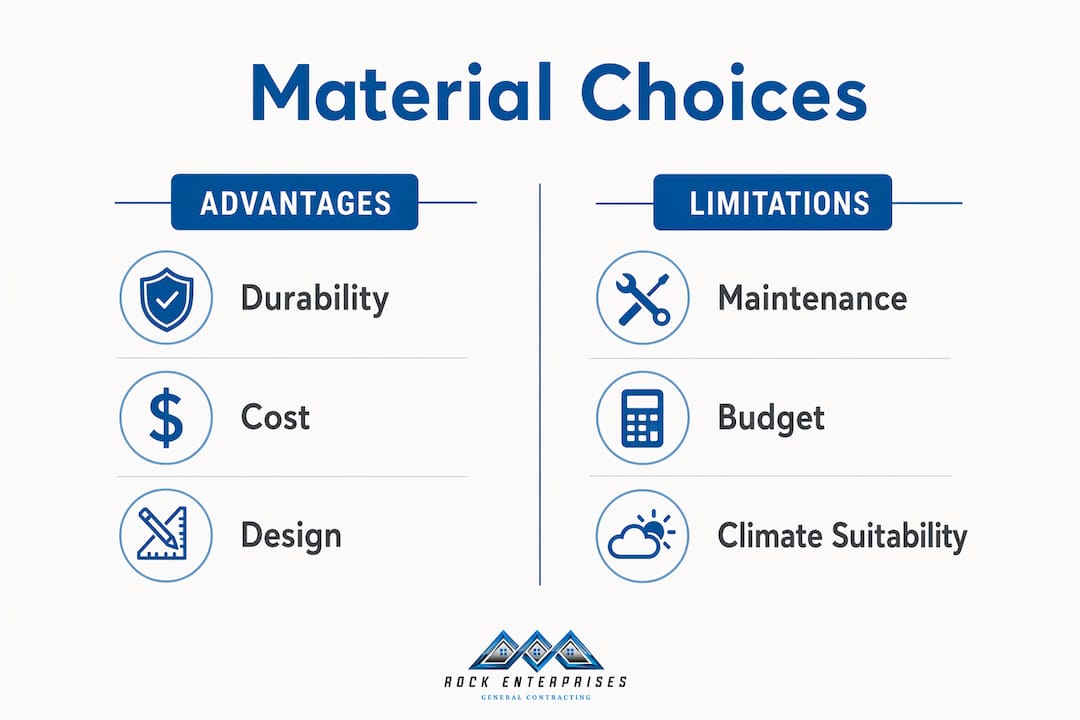
Effective material selection balances six dimensions: durability, maintenance, climate compatibility, structural performance, cost, and design harmony. Trying to win on all six at once leads to paralysis. The practical approach is to rank these dimensions by room, then select accordingly.
- Identify your top two priorities per room. In a family bathroom, durability and ease of cleaning rank first. In a formal dining room, design and durability take priority over maintenance ease.
- Calculate total cost of ownership, not just purchase price. A $3-per-square-foot vinyl floor that needs replacing in eight years costs more over 20 years than a $7-per-square-foot LVP floor that lasts twice as long.
- Check warranty terms before you commit. Manufacturer warranties on flooring and countertops vary widely. A 25-year warranty on LVP is meaningless if it excludes moisture damage in a bathroom application.
- Evaluate installation complexity. Some materials cost less to buy but far more to install. Intricate tile patterns, for example, add labor hours that can double the total project cost.
- Protect design cohesion. A cohesive design theme prevents random choices and selection fatigue, producing a unified renovation rather than a collection of unrelated finishes. Stick to a defined palette across rooms.
Pro Tip: Pull one material from your palette and repeat it in at least two rooms. A consistent floor tile or cabinet color creates visual flow that makes a home feel larger and more intentional.
Lifestyle patterns matter more than most homeowners expect. A household that entertains frequently needs surfaces that clean fast and hide wear. A couple with no children can afford more delicate finishes that would be impractical in a busier home. Matching materials to actual daily behavior, not aspirational behavior, is what separates a satisfying renovation from a regretted one.
Practical steps for sourcing and finalizing your remodel materials
Getting the selection right is only half the job. Sourcing materials without a plan creates delays, budget overruns, and last-minute substitutions that compromise the finished result.
- Test samples in the actual room. Viewing samples under natural morning light and evening artificial lighting ensures accurate color and texture perception. A tile that looks warm gray in the showroom can read as blue under your kitchen’s LED fixtures.
- Build a Plan B list. Supply chain instability can delay specialty materials; an approved backup list prevents project stalls. Every primary material choice should have a vetted alternative that matches the design palette and budget.
- Order early and add overage. Order flooring and tile at least 10% above your measured square footage to account for cuts, breakage, and future repairs. Running out of a discontinued tile mid-project is a costly problem.
- Verify building code compliance before purchasing. Structural materials require compliance with local building codes and approved product lists. Substituting engineered wood for conventional lumber without an engineering sign-off risks inspection failure and structural issues.
- Work with a licensed contractor from the start. A professional who knows local code requirements, supplier relationships, and installation best practices can catch problems before they become expensive mistakes.
| Common mistake | Consequence | Prevention |
|---|---|---|
| Skipping sample testing | Wrong color or texture in finished room | Test in situ under multiple lighting conditions |
| No backup material list | Project stall when primary material is unavailable | Vet two alternatives per primary choice |
| Ignoring building codes | Inspection failure, safety risk | Confirm compliance before ordering |
| Underordering materials | Mismatched replacements later | Add 10% overage to every order |
For homeowners tackling a bathroom remodel, material decisions around tile, vanity surfaces, and flooring directly affect both the room’s function and its long-term value. Getting these choices right from the start avoids costly corrections later.
Key Takeaways
The most durable and satisfying remodels result from matching material properties to room function, lifestyle, and climate before considering aesthetics or trends.
| Point | Details |
|---|---|
| Assess room function first | Match material hardness and porosity to actual traffic and moisture levels in each space. |
| Quartz leads for countertops | Its non-porous surface cuts maintenance time and outperforms granite in busy kitchens and bathrooms. |
| LVP beats hardwood in wet areas | Luxury Vinyl Plank is waterproof and easier to install where moisture is a constant factor. |
| Build a Plan B material list | Supply chain delays are common; a vetted backup prevents costly project stalls. |
| Test samples in the actual room | Lighting changes how materials look; always evaluate under both natural and artificial light on site. |
What I’ve learned after years of watching homeowners choose materials
The most consistent mistake I see is homeowners selecting materials based on how they look in a showroom under perfect lighting, then being surprised when the result feels off in their actual home. Showrooms are designed to make everything look good. Your kitchen is not a showroom.
The second mistake is chasing trends. Trendy materials date a renovation faster than anything else. The homes that still look sharp 15 years after a remodel are the ones where the owners chose timeless, quality materials and let the design details carry the personality. A classic white quartz countertop with a distinctive backsplash tile ages far better than a trendy colored countertop that felt fresh for two years.
Start your material decisions earlier than feels necessary. Selection fatigue is real. When you are three weeks into a remodel, staring at your 12th tile sample, your judgment degrades. The homeowners who make the best choices are the ones who locked in their palette before demolition started.
Finally, work with a contractor who asks questions about how you actually live before recommending materials. The right contractor treats material selection as a functional decision first and an aesthetic one second. That order of priority is what produces renovations people are still happy with a decade later.
— ryan
How Rockenterprisecontracting helps you get material selection right

Rockenterprisecontracting takes the guesswork out of material selection by combining hands-on expertise with a deep knowledge of what performs in New Jersey homes. The owner personally oversees every project, which means material recommendations come from real experience, not a catalog. From kitchen remodeling to full bathroom renovations, the team guides homeowners through every material decision with transparency on cost, durability, and installation. Rockenterprisecontracting holds a 5.0-star rating on Thumbtack and a 100% positive feedback score, serving Monmouth and Ocean County. See the full range of personalized renovation services and find out how the team can help you build a material plan that fits your home, your lifestyle, and your budget.
FAQ
What materials are best for a kitchen remodel?
Quartz is the top choice for countertops due to its non-porous surface and low maintenance requirements. Hardwood or porcelain tile flooring works well depending on your moisture exposure and budget.
Is LVP or hardwood better for home remodels?
LVP is the better choice for moisture-prone areas like bathrooms and basements, while hardwood delivers superior longevity and resale value in dry living spaces.
How do I avoid material substitution problems during a remodel?
Always verify that any substitute material meets local building code requirements before ordering. Substituting structural materials without professional sign-off risks inspection failure and safety issues.
How early should I choose materials for a home remodel?
Lock in your material palette before demolition begins. Early decisions prevent selection fatigue and give your contractor time to source materials and identify supply chain issues before they delay the project.
Does material choice affect home resale value?
Yes. Durable, timeless materials like quartz countertops, hardwood flooring, and fiber cement siding consistently support higher resale values than trend-driven or low-durability alternatives.